Monoliths বনাম Microservices
Modern software-এর সবচেয়ে আলোচিত architectural choice।
একটি বড় বাড়ি বানাবেন: এক বিশাল hall room যেখানে সব কাজ - খাওয়া, ঘুমানো, কাজ - সব? নাকি আলাদা বেডরুম, কিচেন, অফিস room? প্রথমটা monolith, দ্বিতীয়টা microservice। দুটোরই জায়গা আছে - কিন্তু কোনটা কখন?
Monolith কী?
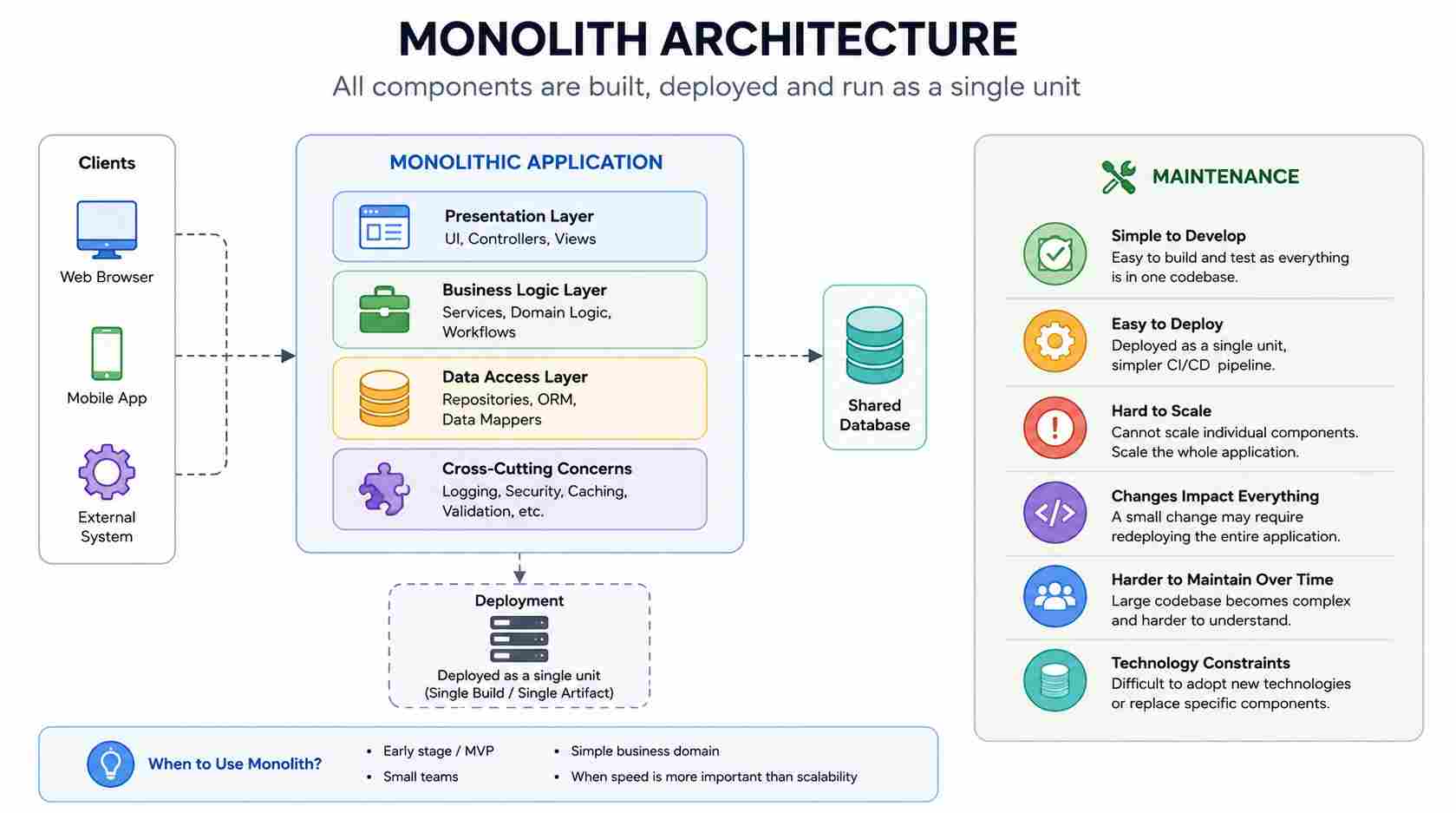
Monolithic Architecture = সম্পূর্ণ application একটি single codebase, single deployment unit, single process। সব functionality (UI, business logic, DB access) একসাথে।
Structure
Microservice কী?
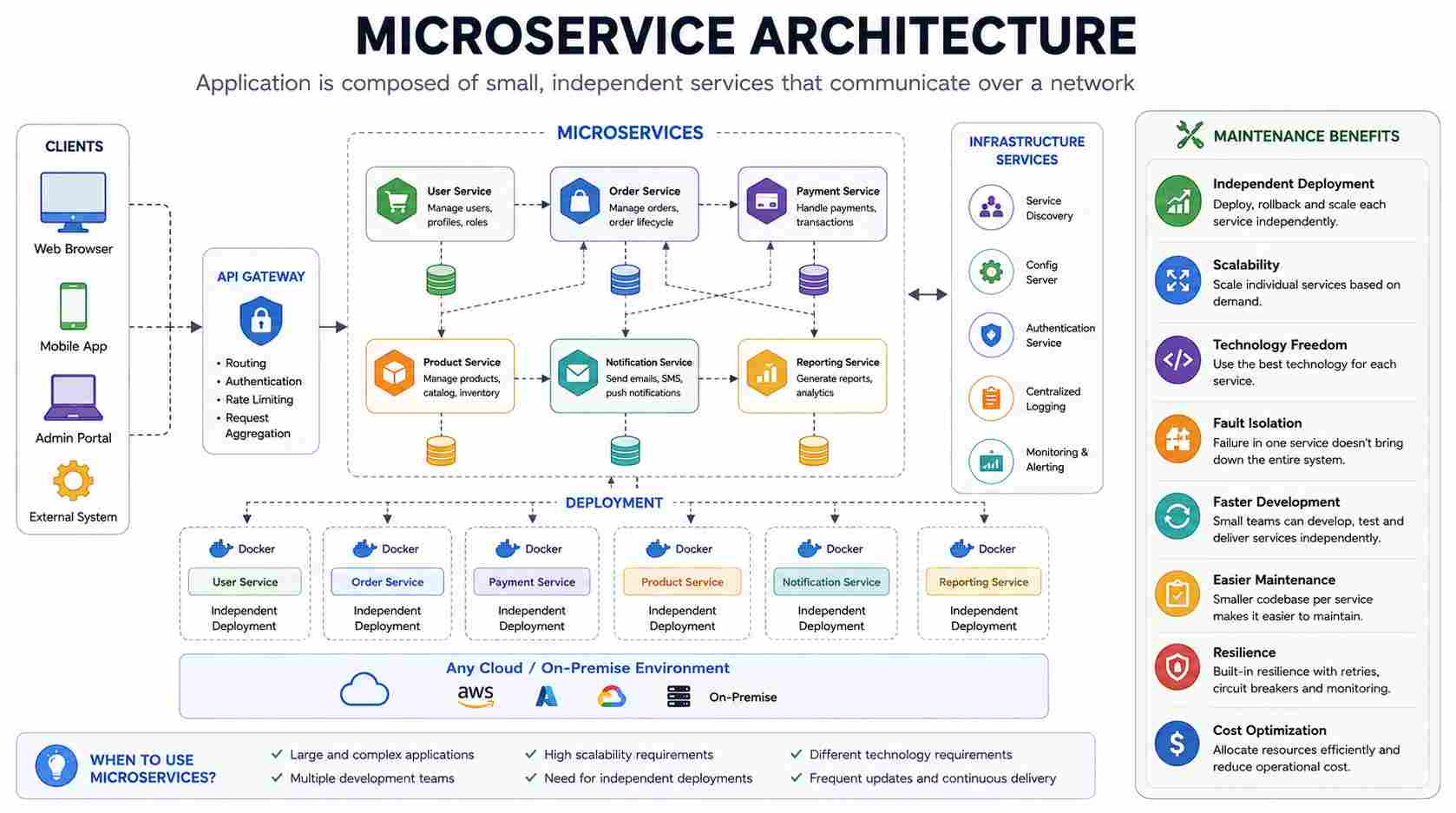
Microservices Architecture = application কে ছোট, স্বাধীন service-এ ভাগ। প্রতিটি service:
- Single responsibility।
- Own codebase ও deployment।
- Own database (preferably)।
- API/event দিয়ে যোগাযোগ।
বিস্তারিত তুলনা
Monolith
- Single codebase
- One deployment
- One DB
- Internal call (in-process)
- Tech stack lock-in
- Simple debugging
- Slow scaling
- One bug → entire app down
Microservices
- Multiple codebases
- Independent deployments
- Per-service DB
- Network call
- Polyglot - different tech
- Distributed debugging
- Independent scaling
- Fault isolation
Monolith-এর সুবিধা
- Simple development: One codebase, easy navigation।
- Easy debugging: Single process, integrated stack trace।
- Performance: In-process call - no network latency।
- ACID transaction: Single DB - easy।
- Easy testing: End-to-end test simple।
- Low operational overhead: One deployment।
- Less DevOps complexity।
Monolith-এর অসুবিধা
- Scaling difficult: Whole app together scale করতে হয়।
- Slow deployment: One small change = full redeploy।
- Tech lock-in: Single tech stack across the app।
- Fault impact: One bug = entire app down।
- Team coordination: Big team-এ codebase conflict।
- Codebase complexity: Time-এর সাথে monolith bloat।
Microservice-এর সুবিধা
- Independent scaling: Hot service শুধু scale।
- Independent deployment: Service বদলালে অন্যরা untouched।
- Tech diversity: Best tool per service।
- Fault isolation: One service fail = others continue।
- Team autonomy: Each team owns service end-to-end।
- Faster development: Small codebase per service।
- Polyglot persistence: Different DB per need।
Microservice-এর অসুবিধা
- Distributed complexity: Network failures, latency।
- Operational overhead: Many deployments, monitoring।
- Distributed transactions: Saga, eventual consistency।
- Debugging: Cross-service trace কঠিন।
- Testing complex: End-to-end test challenging।
- DevOps requirement: CI/CD, K8s, observability tooling।
- Initial cost high: Infrastructure + organizational effort।
কখন কোনটা?
Monolith ভালো যখন:
- Startup/MVP - দ্রুত launch।
- Small team (~১০ এর কম)।
- Application boundary unclear।
- Domain simple।
- Limited scale need।
- Strong ACID transaction requirement।
Microservice ভালো যখন:
- Application large + complex domain।
- Big team (multiple teams)।
- Different feature-এ different scaling need।
- Tech diversity দরকার।
- High availability required।
- Frequent deployment।
Migration Strategy
Monolith First (Recommended)
Martin Fowler-এর advice - monolith দিয়ে শুরু, পরে extract করুন।
কারণ: domain boundary প্রথমে clear না; wrong split disastrous।
Strangler Fig Pattern
Old monolith-এ ধাপে ধাপে নতুন service add - পুরাতন code "strangle" করে।
- Identify bounded context।
- One module extract - service বানান।
- Traffic redirect (proxy)।
- Repeat - until monolith empty।
Modular Monolith - Middle Ground
Monolith কিন্তু well-organized:
- Single deployment।
- Internal module boundary strict।
- Each module-এর own DB tables।
- Easy to extract later।
অনেক ক্ষেত্রে - modular monolith microservice-এর চেয়ে ভালো।
বাস্তব উদাহরণ
Monolith-এ থাকা successful
- Stack Overflow: Famous monolith - high traffic, simple architecture।
- GitHub: Rails monolith (initially)।
- Basecamp: Rails majestic monolith।
Microservice-এ গেছে
- Netflix: Pioneers - 700+ microservice।
- Amazon: Hundreds of services।
- Uber: 2200+ microservice (পরে কিছু consolidate)।
- Spotify: Squad-based microservice।
সাধারণ ভুল ধারণা
- "Microservice always better": না - small project-এ disaster।
- "Microservice = scalable": Monolith ও scale করা যায় (Stack Overflow proof)।
- "Big company microservice": Big company microservice কারণ তাদের team scale problem।
- "Microservice migration easy": Years of effort + many failures।
Best Practices
- Start with monolith (or modular monolith)।
- Domain-Driven Design (DDD) দিয়ে boundary identify।
- Microservice-এ যাওয়ার আগে - DevOps maturity verify।
- Strangler fig - gradual migration।
- Microservice = team autonomy + scale; না হলে স্বার্থে যাবেন না।
- Observability (logging, tracing, metrics) - microservice-এ critical।
📌 চ্যাপ্টার সারমর্ম
- Monolith: single codebase + single deployment। Simple, fast, but scaling/team-এ challenge।
- Microservice: small independent service। Flexible, scalable, কিন্তু complex।
- Start monolith → extract পরে (strangler fig)।
- Modular monolith অনেক ক্ষেত্রে best balance।
- Choose-এর basis: team size, domain complexity, scale need।